How Quick Turnaround Booklet Printing Boosts Local Business Marketing
I have been involved in print production for over a decade, and I can tell you that nothing throws a marketing calendar off like a long wait for printed materials. When a client needs booklets for a trade show, a product launch, or a training session that is happening next week, the standard two-week turnaround simply will not cut it. That is where quick turnaround booklet printing becomes a genuine lifeline for businesses across Lancaster and beyond. The ability to go from a digital file to a finished, bound booklet in just a few days changes how companies plan their campaigns and respond to opportunities.
Many people think fast printing means lower quality, but that is not true anymore. Modern digital printing technology, combined with experienced prepress teams, can deliver crisp results on coated paper or uncoated paper with accurate color matching, all within a compressed schedule. The key is knowing which production methods to use and when to use them. In this article, I will walk through the practical side of quick turnaround booklet printing, covering binding options, paper choices, and the real-world trade-offs that come with speed.
Why Speed Matters for Booklet Projects
Booklets serve many purposes: event programs, product catalogs, training manuals, portfolio showcases, and marketing brochures. Each of these applications has a deadline. An event program is useless after the event starts. A training manual needs to be in attendees' hands before the first session. A product catalog must arrive at a trade show booth before the doors open. When those deadlines are tight, quick turnaround booklet printing is not a luxury, it is a requirement.
I once worked with a local nonprofit in Lancaster that needed two thousand booklets for a fundraising gala. They finalized the sponsor list just ten days before the event. With a standard print timeline, they would have been out of luck. But by choosing a print partner that specialized in fast production, they received the finished booklets in five business days. The booklets used saddle stitching, which is one of the fastest binding methods, and they printed on uncoated paper to avoid the extra drying time that coated stocks sometimes require. The result was a professional piece that met their deadline and stayed within budget.

Binding Options for Fast Turnarounds
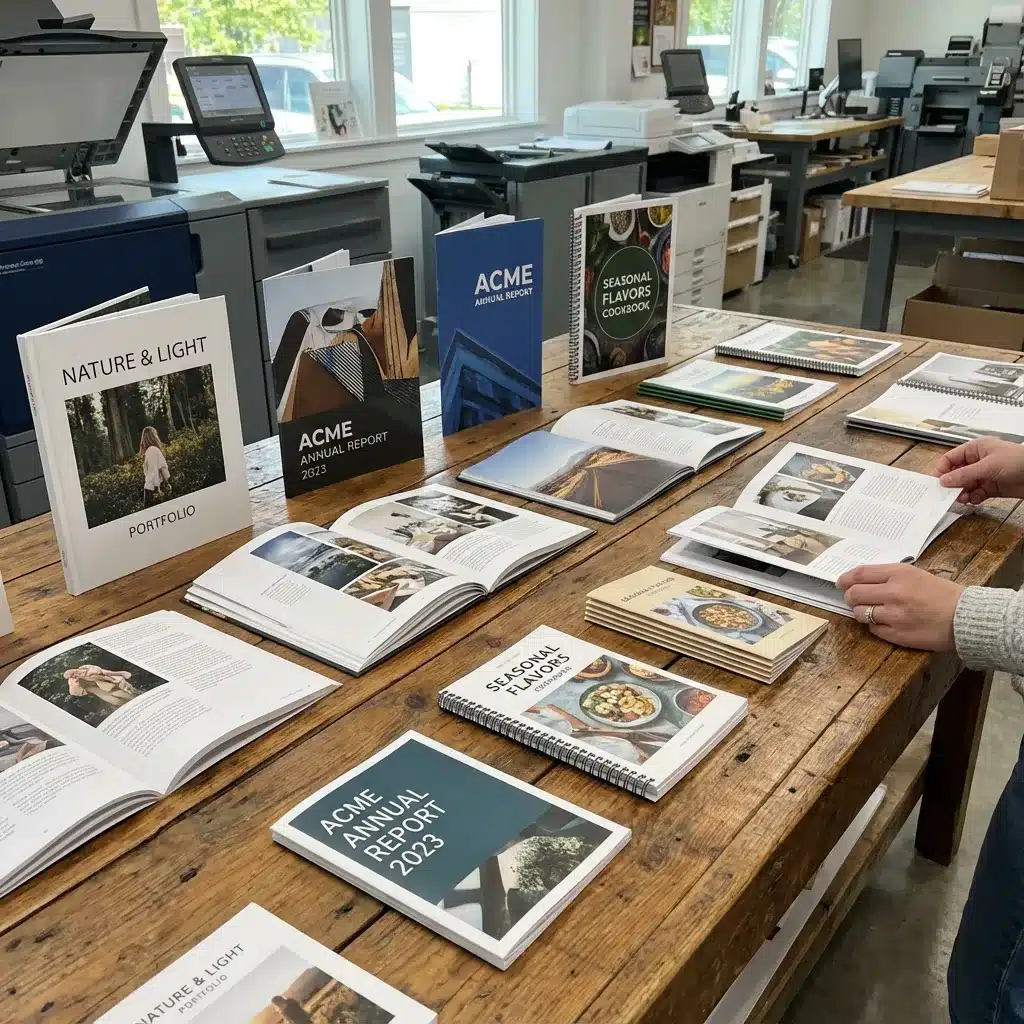
Not all binding methods work well under a tight schedule. The choice of binding affects both production speed and the final look of the booklet. Here are the most common options and how they fit into quick turnaround work:
- Saddle Stitching - This is the fastest binding method for booklets up to about 64 pages. Staples are driven through the fold of the spine, and the process is entirely automated. Saddle stitching works best for booklets that will lie flat when opened, such as event programs and short catalogs.
- Spiral Binding - Also called coil binding, this method uses a plastic coil that is threaded through holes punched along the spine. It is moderately fast and allows the booklet to lay flat. Spiral binding is popular for training manuals and reference guides.
- Perfect Binding - This method glues the pages to the spine and creates a square, professional edge. Perfect binding takes longer because the glue needs time to set. It is still possible for quick turnaround, but the schedule will be tighter, and the minimum page count is usually around 24 pages.
- Hardcover Binding - For portfolios or premium presentations, hardcover binding creates a durable, impressive book. It is the slowest option and rarely works for true rush jobs unless the printer keeps pre-made cases in stock.
For most quick turnaround booklet printing, saddle stitching is the default choice. It is reliable, cost-effective, and can be completed in a single production shift. Spiral binding is a close second when the booklet needs to stay open on a desk. Perfect binding is worth considering if the page count is high and the budget allows for a slightly longer lead time.
Paper Selection and Its Effect on Speed
Paper choice directly influences how fast a print job can move through the press and finishing department. Coated paper, such as gloss or satin, gives images a sharp, vibrant look. But coated stocks require longer drying times between printing and binding, especially when heavy ink coverage is involved. Uncoated paper absorbs ink more quickly, which can speed up the process. However, uncoated paper does not provide the same level of contrast for photographs.
For a quick turnaround, I usually recommend uncoated paper for the inside pages and a coated cover stock if the cover needs a polished appearance. That balance gives you speed where it matters most, while still allowing for a premium feel on the outside. Color matching also becomes important here. Digital printing presses can produce consistent color across a run, but if you need a specific Pantone color, offset printing may be required. Offset printing typically has a longer setup time, so for fast work, digital printing is often the better choice.
Prepress and Proofing in a Rush
When time is short, the prepress stage becomes critical. A common mistake is to skip proofing to save a day. I have seen this backfire many times. A missing page, a reversed image, or a typo can ruin a run of thousands of booklets. The solution is to use soft proofing, which means reviewing a digital PDF on screen, combined with a quick hard proof if the budget allows. Many print shops now offer remote proofing, so you can approve a file from your office without waiting for a physical sample to arrive by mail.
One practical tip: make sure your file includes proper bleed. Bleed is the extra margin that extends beyond the trim size, usually an eighth of an inch on each side. Without it, white edges can appear along the edges of the trimmed booklet. If the file has no bleed, the printer may need to add it, which takes time. Providing a print-ready file with correct bleed, trim size, and color space can shave hours off the production schedule.
Real-World Applications in Lancaster
Lancaster has a vibrant mix of small businesses, arts organizations, and educational institutions. Each of these groups uses booklets in different ways. A local theater company might need programs printed in a week for a new show. A real estate agent might need portfolio booklets for an open house. A manufacturer might need technical manuals for a product training session. In all these cases, quick turnaround booklet printing allows them to respond to real-time needs without sacrificing quality.
I have also seen local businesses take advantage of local pickup. When a printer is based in the same city, you can often pick up the finished booklets directly, avoiding shipping delays. That is a small but meaningful advantage when every hour counts. White label printing is another service that local print shops offer. If you are a marketing agency or a designer, you can order booklets with no printer branding on them, so your client sees only your logo. This works well for agencies that want to offer printed materials as part of their service without investing in their own press.
Eco-Friendly Options and Fast Printing
Some people assume that fast printing cannot be environmentally responsible. That is not the case. Many print shops now use eco-friendly inks, such as soy-based or vegetable-based formulations, which reduce volatile organic compounds. Digital printing also produces less waste than offset printing because there is no need to create plates, and the press can print exactly the quantity needed. For a quick turnaround booklet printing project, you can often choose recycled or FSC-certified paper without adding extra days to the schedule. Talk to your printer about the options they carry.
Special Finishes and Formats
Not every booklet is a simple stapled piece. Some projects call for special formats like gatefold covers, which open like a double door to reveal a large image or message. Others require micro-perforation for tear-off reply cards or coupons. These features add complexity and usually require extra time. If you are on a tight deadline, it is wise to keep the design straightforward. A clean layout with a single fold and a standard trim size will move through production faster than a design with multiple panels and perforations.
Booklet sizes also affect speed. Common sizes like 8.5 by 11 inches folded to 5.5 by 8.5 inches, or 8.5 by 5.5 inches folded to 4.25 by 5.5 inches, are standard and can be processed without special setup. Non-standard sizes may require custom cutting, which adds time. If speed is your priority, stick with a standard trim size.
Making the Most of a Fast Timeline
To get the best results from quick turnaround booklet printing, plan ahead as much as you can. Even if the final content is not ready, you can prepare the file structure, set the trim size, choose the paper, and confirm the binding method. When the content arrives, it can be dropped into the template and sent to press immediately. Good communication with the print team also helps. Let them know the deadline on the first call, so they can schedule the job and advise on any trade-offs.

I have worked with printers who can turn around a saddle-stitched booklet in 24 hours if the file is perfect and the quantity is reasonable. That kind of speed is rare but possible. For most projects, a three to five business day turnaround is realistic and reliable. The key is to find a print partner who understands the local market and has the equipment to deliver on time.
Final Thoughts
Quick turnaround booklet printing is not about cutting corners. It is about having a production workflow that is efficient, well-practiced, and backed by the right technology. Whether you need fifty booklets for a board meeting or five thousand for a product launch, speed does not have to come at the expense of quality. With careful planning, good communication, and a clear understanding of binding and paper options, you can get professional booklets in hand when you need them most.